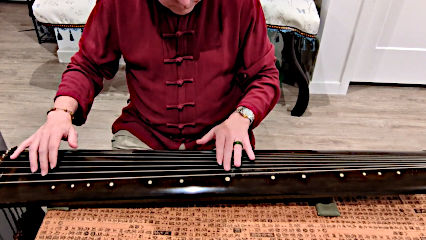
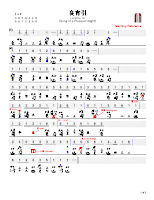
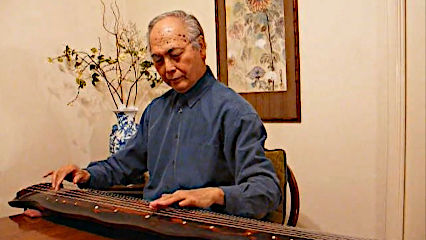
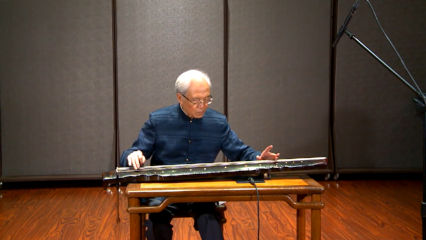
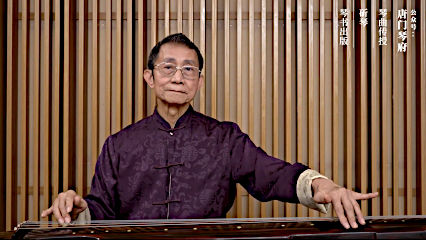
《良宵引》(pinyin: LiángXiāo Yǐn), “Song of a Pleasant Night”, is a famous Chinese guqin piece that is representative of the Yushan guqin school. It is often used as an introductory piece for beginning guqin students. It was first published in the Ming Dynasty’s “Songxianguan Qinpu” in 1614, and it is the only Ming Dynasty guqin score included in the “Siku Quanshu” (“Complete Library of the Four Treasuries”, 1782).
The piece was created in the Sui Dynasty (581-618 AD) and was re-popularized in the Ming Dynasty . It has always been highly appreciated and valued by guqin players and included in many guqin score collections. After over a thousand years, it continues to have great influence in the guqin world.
The song evokes the mood of a pleasant evening. There is no particular poetry or lyrics to suggest anything more specific than that. Some suggest the theme is focused on a loving couple spending time together, while others claim it is about quiet thoughts of separation from a loved. Whatever it specifically evokes, there is no doubt that it is a beautiful piece and a joy to play.
Although considered a song taught to beginners, this piece does actually introduce a number of new techniques and complicated fingering styles, such 滸 (hǔ) and 罨 (yǎn).
打圓 (dǎ-yuán) – a sequence of repeated 挑 (tiāo) and 勾 (gōu), making a total of 5 or 7 sounds
輪 (lún) – playing 摘 (zhāi), 剔 (tī) and 挑 (tiāo) in rapid succession on one string to produce three very quick notes
如一 (rú-yī) – playing two adjacent strings in a single motion to produce one sound
雙彈 (shuāng-tàn) – with one string pressed and one open, playing 剔 (tī) and 挑 (tiāo) in succession across the two strings, producing two notes
搯撮三聲 (tāo-cuō-sān-shēng) – after playing 撮 (cuō), continuing to press with the left ring finger while playing a pattern of 罨 (yǎn), 搯 (tāo), and 撮 (cuō): yǎn…tāo…cuō…yǎn-tāo-yǎn…tāo…cuō
帶起 (dài -qǐ) – after pressed note has been played with the left ring finger, hooking and pulling the ring finger off of the string to pluck the string, creating an open string sound
逗 (dòu) – similar to 撞 (zhuàng) but played quickly and nimbly to obtain a delicate and subtle sound
反撞 (fǎn-zhuàng) – performing 撞 (zhuàng) in the reverse direction (i.e. moving to a lower pitch and then back to the original position)
滸 (hǔ) – after playing a pressed note, gliding up lightly one or more positions with the left hand
虛上 (xū-shàng) – after playing a pressed note followed by an open string, continuing to press the first string (虛 xū) and sliding up (上 shàng) to a new position
罨 (yǎn) – quickly striking the string on the face of the qin to make a tone